What is a Wind Phone?
A telephone connected to nothing, in a garden above the sea.
A Wind Phone is a telephone connected to nothing. You pick up the receiver, you speak to someone who has died, and the words go where words go. No line, no signal, no one on the other end. That is the entire design, and the emptiness of it is the point.
The first one
In December 2010, a garden designer named Itaru Sasaki set an old black rotary phone inside a white glass-paned booth on a hillside in Ōtsuchi, a fishing town on the northeast coast of Japan. His cousin had died of cancer and he could not stop wanting to talk to him.
"Because my thoughts couldn't be relayed over a regular phone line, I wanted them to be carried on the wind."
He called it kaze no denwa, the phone of the wind. It was built for one grieving person, in a private garden, with no intention that anyone else would ever use it.
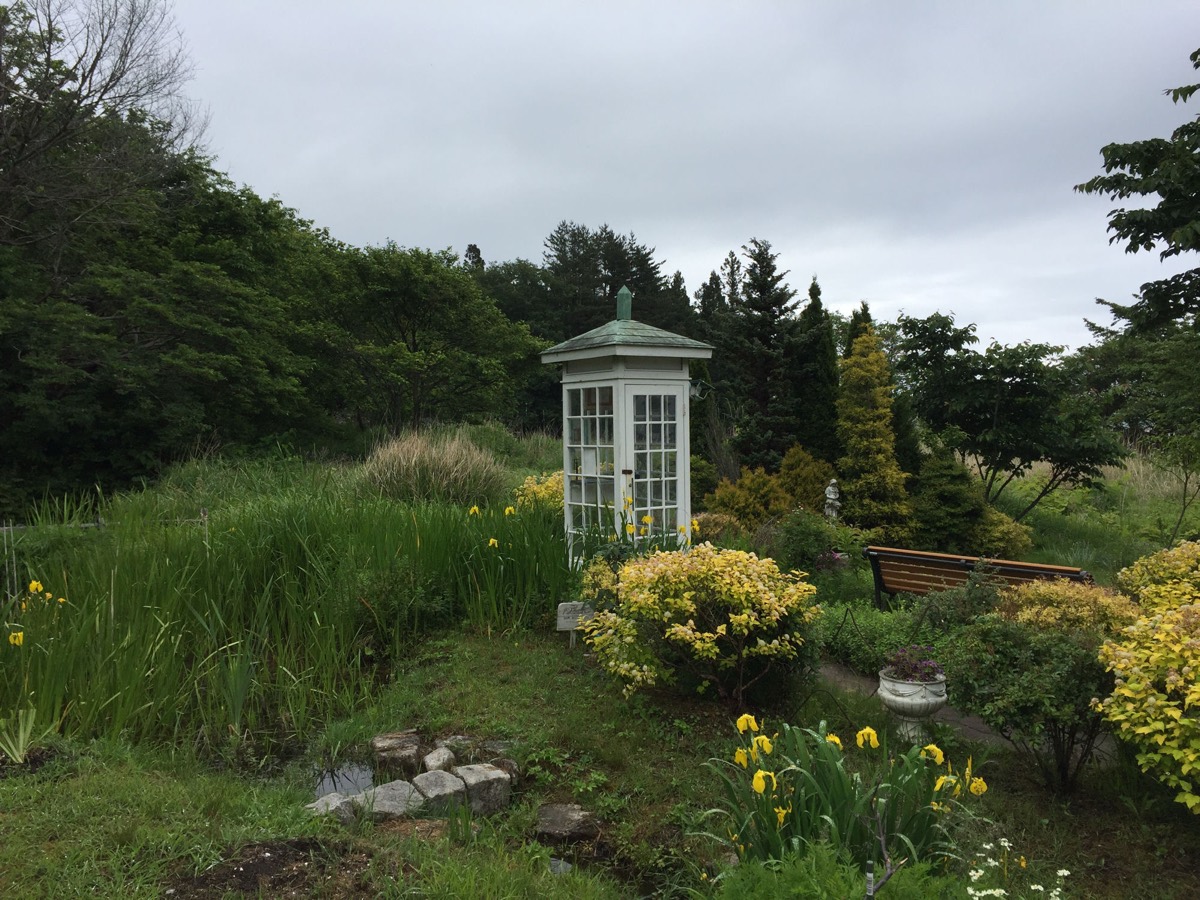
What changed
Three months later, on 11 March 2011, the Tōhoku earthquake sent a tsunami into that coast. Around 1,400 people died in Ōtsuchi, close to one in ten of the town. Sasaki opened the garden to anyone who needed it.
They came, and have kept coming: more than 30,000 visitors in the years since, dialling numbers that no longer connect, saying the things there had been no chance to say. The story of what happened there is why the idea spread at all.
Why an object helps
Nothing about a disconnected phone is magic, and no one using one believes it is. What it does is lower a threshold. Speaking out loud to someone who has died feels absurd in an empty room and completely natural with a receiver against your ear, because your body already knows that posture. It has done it a thousand times, often with the same person.
Grief therapists use the same mechanism under other names. Empty chair work, unsent letters, graveside conversation. A Wind Phone is that idea given a handle. Whether it helps is a fair question, and the honest answer is that it helps some people a great deal and does nothing for others.
Wind Phones now
There are hundreds of them. Booths in public gardens, receivers nailed to trees on hiking trails, phones in hospice grounds and school memorial corners, most built by someone who lost a person and then wanted to leave a place for other people to do the same thing. The ones that can be verified are mapped here, and building one takes a weekend and a dead handset.
And there is this one, which is a webpage. It is not the same as standing on that hill, and it does not pretend to be. It is open at three in the morning, which the hill is not.
Say what you need to say. The line is connected to nothing: no one hears you, nothing is recorded, nothing is stored.