Messages from Heaven
Forty-one sentences people reach for when they need to hear something. What each one says, and what it is doing.
Messages from Heaven is a deck of affirmation cards, each one a short sentence written as though the person you lost were saying it. They circulate as printed decks, as phone wallpapers, as images passed between people who have both lost someone. You draw one, or one finds you in a feed at two in the morning.
Every sentence below was written by a living person. Nobody is claiming otherwise, and the cards do not need it to be true to do what they do. What follows is forty-one of them, grouped by the job each one is actually doing, because a deck this size is really five small decks.
I am still here
-

The oldest one in the deck, and the one people reach for when they have to do something alone that they used to do accompanied. It answers being unwitnessed rather than being unloved.
-

The same promise as the card above, in a domestic register: a lit window and a lamp rather than wings and open sky. Decks carry both because the two images do not comfort the same person.
-

Company rather than supervision, which is the whole difference between this card and the one above it. Beside, not above: it is for people who find being watched over from a great height slightly cold.
-

The most carefully worded card here. In spirit concedes that the body is gone while keeping everything else, which is the compromise most bereaved people are already living in.
-

A larger claim than the other presence cards make, and it cuts both ways: a comfort at a graduation, an odd thought in the shower. Most people quietly apply it only to the moments they want.
-

Gives grief somewhere to point. A great deal of mourning is bodily and has no direction to face, which is why people drive to graves, or to hillsides, or pick up a phone connected to nothing.
-

Deliberately small. Not a message with content, just contact, which is what most people say they miss first: not the conversations, the pinging in and out of each other's days.
-

Not a claim about company. A claim about the specific loneliness of being the only person in the room who remembers something, which is the part of loss that outlasts the funeral by years.
-

Quietly the most durable line in the deck, because it makes your own feeling the evidence rather than requiring a sign from outside. Nothing can disconfirm it, which is exactly why it holds.
-

The only card that asks your body to do something. Grief is physical before it is anything else, and an instruction you can follow in four seconds beats a sentiment you cannot act on at all.
The things you already noticed
-

The card that licenses all the others in this group. Once it is accepted, the song on the radio and the found receipt and the robin on the fence all become correspondence.
-

The expansive version. Where the butterfly card explains one thing that happened, this one hands you the entire world to read, which is either a great comfort or a lot of homework.
-
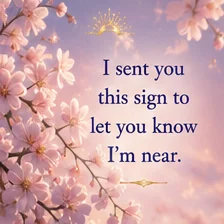
Written on the assumption that something has already happened and you are looking for a caption for it. Almost nobody arrives at this deck cold.
-

Retroactively explains something you had already half decided. That is its whole mechanism, and it is the same one behind angel numbers: a thing that already happened is handed a sender.
-

A question rather than a statement, and the only card that asks you to do something with it. Feathers are the most reported sign after numbers, which is why this image and this sentence travel together.
-

Grief dreams are common, vivid, and often the only place people see the person's face moving again. This card reframes them from a symptom into a meeting, which is why it tends to be somebody's favourite.
You can put it down
-

The hardest working card there is. Almost everyone bereaved is carrying a private charge sheet: the call not made, the argument not finished, the relief they felt. This card grants permission, which is easier to accept than to give yourself.
-

An instruction rather than a message, and the only one here that asks you to give something up. Waiting is the kind word in it: the card does not say when.
-

The first card in the deck that looks forward instead of back. People tend not to draw it early. It belongs to the stretch where the future stops feeling like a betrayal.
-

Aimed at a particular kind of insomnia: the one where you keep checking on someone you can no longer check on. Worry is a habit of care, and it does not stop just because its object has.
-

Two clauses doing different jobs. The first answers the question that haunts people after a hard death, or a death by suicide: was there pain, was there fear. The second is an instruction dressed as an observation.
-

The only card that makes their peace depend on you, and it goes straight at the fear that they are somewhere unsettled. Its comfort is that you already gave them what they needed, before any of this.
-

The most generic sentence in the deck, and the one that annoys people in early grief, where nothing about being here is right. It is written for later, and it is worth putting back until then.
The ones about your life, not theirs
-

The one sentence here that is about you and not about them. It usually arrives from people who have run out of other things to say, which is why it works better on a card than in a kitchen.
-

A promise about time, and the card most likely to be resented in the first month. Already is doing the work: it insists the improvement has started even when nothing feels like it has.
-

Quietly the most demanding message here: it asks you to keep developing as a person while carrying this. Note the we. Several cards speak in the plural, as though everyone you have lost were standing together.
-
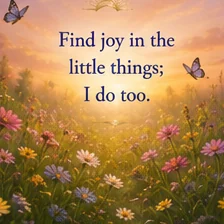
The I do too is what lifts this above an ordinary affirmation. Joy is offered as something still shared with them, rather than as evidence of moving on from them.
-
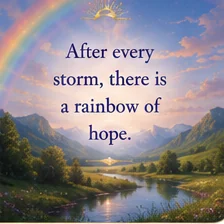
The most greeting-card line in the deck. It earns its place anyway: early grief is weather with no visible end, and a card insisting there is one is sometimes the entire ask.
-

The card most out of step with the rest, because it makes the outcome depend on you. Worth knowing that before it turns up on a day when nothing worked out.
-

Deliberately small in scale: not a visitation, just a parking space and a song you needed. It asks very little of your credulity, which is why sceptical people keep it.
-

Written for specific hours. Grief keeps its worst appointments between two and four in the morning, when there is nobody to call and nothing open.
-

For decisions rather than for sadness: the house, the job, the person waiting on an answer. It offers company inside a choice without pretending to make it for you.
-
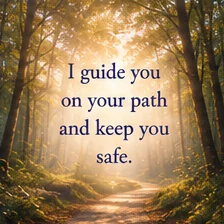
A parent's sentence, and mostly drawn by people who lost one. It restores the thing that goes missing first: somebody whose job it was to worry about you.
Love, unchanged
-

For a fear people rarely admit to: not that they will forget the dead, but that the dead somehow left them behind. Note that it is the person who died doing the reassuring.
-

Surrounds, not reaches. The love is described as weather rather than as something being sent, so nothing has to arrive for the card to be true.
-

The reciprocal of what the bereaved are already doing. Everyone knows they still carry the dead. What nobody can know is whether it runs the other way, and this card simply says it does.
-

Three tenses in nine words, and the only card that mentions choosing. It is kept most often by widowed and unmarried partners, including the ones whose relationship was never quite recognised by anyone else.
-

Left behind turns the loss into an inheritance rather than a subtraction. The love is described as an object still in the room, which is a useful thing to be told while sorting their things.
-

Usually read as romantic, but the people who keep it are as often grieving a sibling, a friend, or a mother. It is a card about a bond having been rare, not about what kind of bond it was.
-

Present tense on purpose. The tense is the entire message: the relationship is described as ongoing rather than finished, which is the same move continuing bonds makes in the research.
-

The one card that makes a promise about the future, and the one that depends most on what you already believe. For some people it is the whole point of the deck. For others it is the card they put back.
-

Three abstractions and no picture, which is why people call it the generic one. It is functioning as a blessing, and blessings are supposed to be general.
Why a card lands when advice does not
Nothing on any of these cards is news. You already know they would not want you carrying the guilt. You have been told, by people who love you, that it was not your fault. It did not work, and then a rectangle of cardstock said the same thing and something loosened.
Two ordinary reasons for that. The first is the voice: these sentences are written in the second person, from them to you, which is the one direction grief cannot supply for itself. You can rehearse what they would say, but you cannot be surprised by it. A card can surprise you.
The second is that advice comes with a person attached who wants something for you, usually for you to be better soon. A card wants nothing. It says its sentence and asks for no reply, and that turns out to be a great deal easier to accept.
None of this requires the messages to be real. The comfort is doing genuine work whether or not anything sent it, in the same way that talking out loud to someone who died helps without anyone claiming they are listening.
When to be careful with them
These are affirmation cards, not counsel. They are worth a second look in only two situations: if the deck has become the only thing getting you through a day, and if you find yourself making real decisions, about money, medicine or people, on the strength of what a card said. Neither is common, and neither is a failing. Both are worth saying out loud to somebody qualified.
Otherwise, a drawn card is closer to lighting a candle than to a seance, and it is nobody's business but yours.
The messages that go the other way
All forty-one cards are addressed to you. That is the appeal, and it is also the limit: the whole deck is post arriving, and none of it is post going out.
Most people who keep these cards have something they still want to say back. An answer to the guilt card. A piece of news. The sentence that never got said while it still could be. There is nowhere obvious to put that, which is what a Wind Phone is for: you pick it up, you say it out loud, and the line is connected to nothing at all.
Say what you need to say. The line is connected to nothing: no one hears you, nothing is recorded, nothing is stored.